Climate & Resilience
We safeguard development against environmental uncertainty through proactive risk assessment and disaster reduction strategies. By blending predictive moedling with nature-based solutions, we help clients identify threats early and build lasting climate resilience.

Overview
In an era of environmental uncertainty, Niyatra Consult bridges the gap between progressive policy and on-the-ground action. We position climate resilience as a core pillar of sustainable development, specializing in high-level climate risk assessments, disaster risk reduction (DRR), and proactive adaptation planning for Nepal’s most vulnerable sectors. By blending cutting-edge predictive modeling with nature-based solutions, we empower our clients to identify environmental threats early and transition from reactive crisis management to proactive climate leadership.
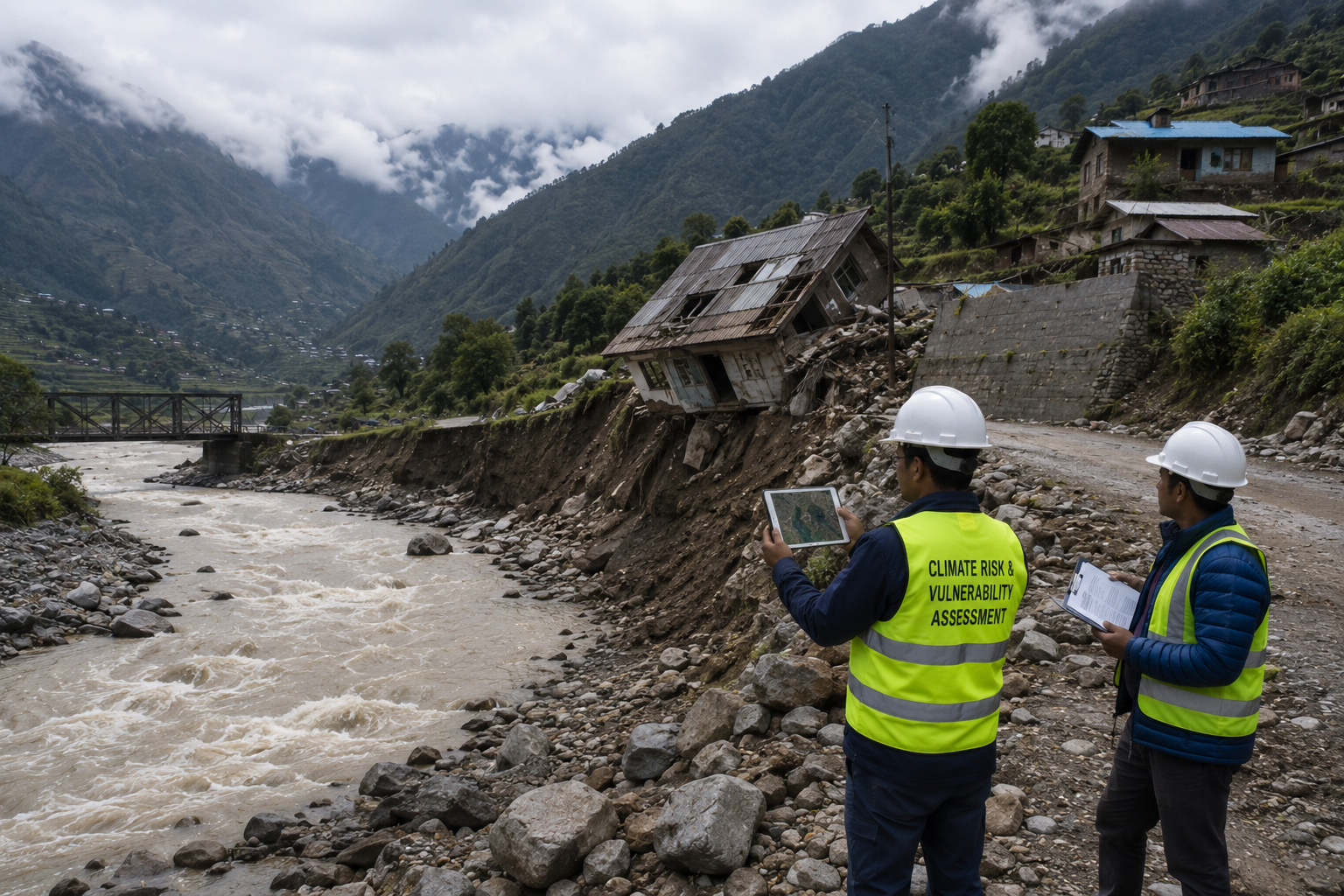
Climate Risk & Vulnerability Assessments
Our climate risk and vulnerability assessments go beyond standard regional analysis to provide granular, asset-level insights. We utilize standardized hazard data and high-resolution geospatial modeling to pinpoint exposure across your specific infrastructure, operations, and community projects. By quantifying the sensitivity of assets to variables like erratic precipitation, glacial melt, and extreme temperature shifts, we translate climate exposure into clear risk metrics. This allows our clients to anticipate operational downtime and long-term asset depreciation, providing the essential business and social case for prioritizing adaptation investment.
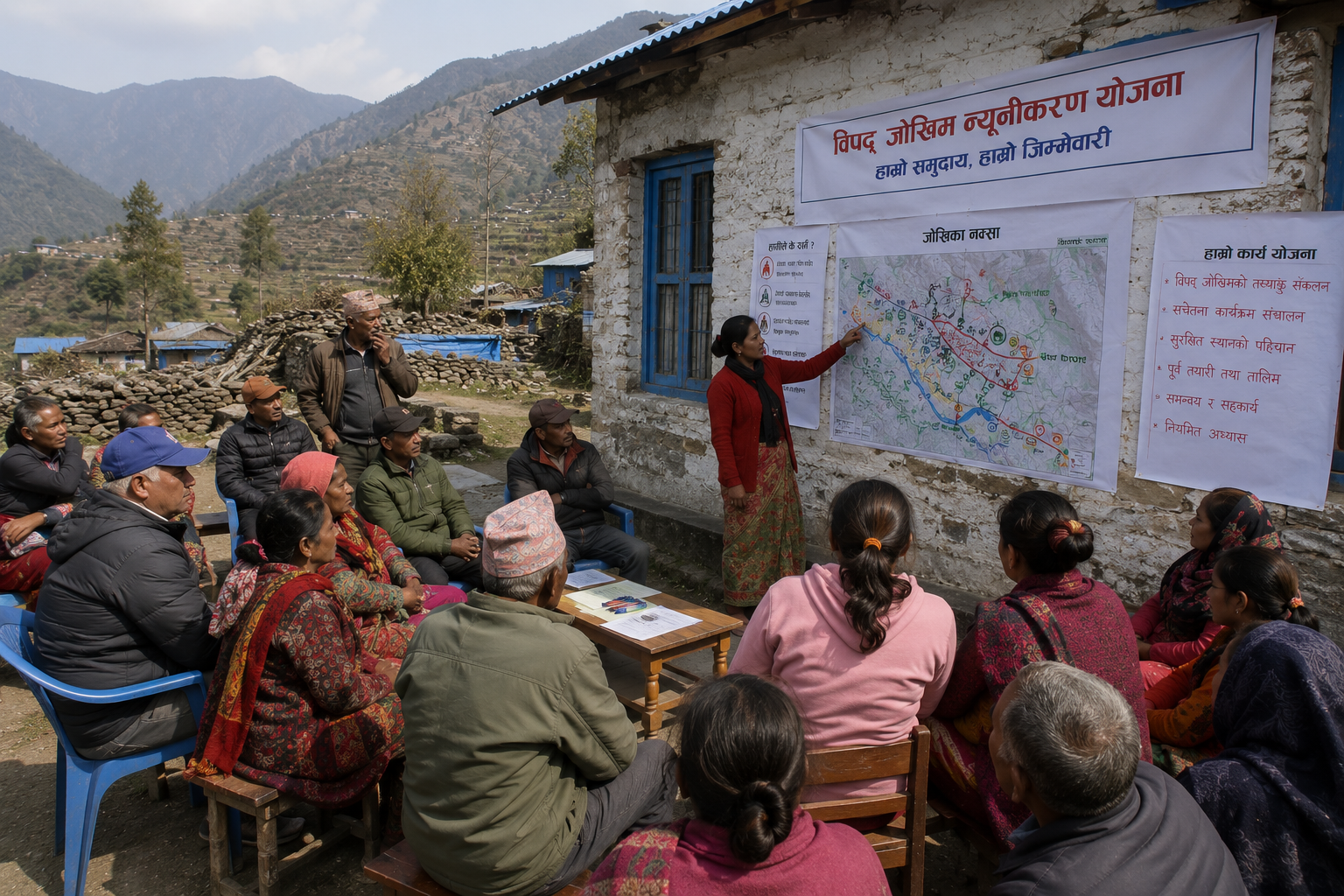
Disaster Risk Reduction (DRR) Planning
We specialize in developing comprehensive DRR frameworks that move beyond theory to integrate climate-informed decision-making directly into the project cycle. Our approach bridges the gap between national mandates and local reality, helping both local government bodies and private sector partners align their development goals with frameworks like the Sendai Accord or Nepal’s Local Disaster and Climate Resilience Plans (LDCRP). We facilitate community-based risk mapping and design actionable contingency protocols, ensuring that disaster mitigation is a foundational component of project planning rather than an afterthought.
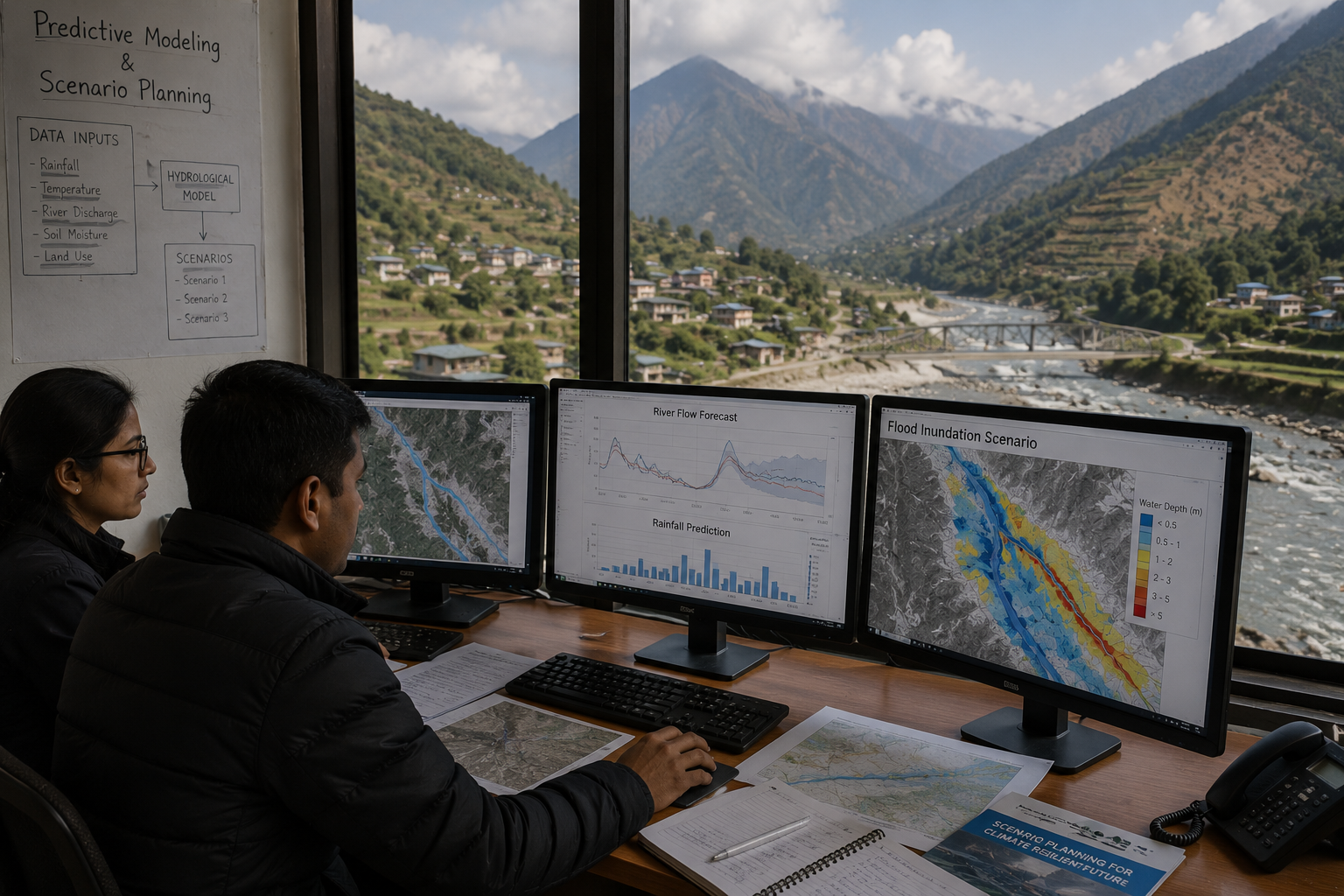
Predictive Modeling & Scenario Planning
To ensure your developments are truly future-proof, we employ advanced predictive modeling to stress-test infrastructure against a wide array of environmental scenarios. By simulating extreme events, such as 50-year flood cycles or prolonged drought periods, we uncover critical vulnerabilities long before they become costly liabilities. We provide multi-horizon forecasting that looks at both short-term operational needs and long-term climate projections through 2050. This data-driven approach allows our clients to rank their project portfolios by risk level, ensuring that limited resources are directed toward the most high-vulnerability zones.
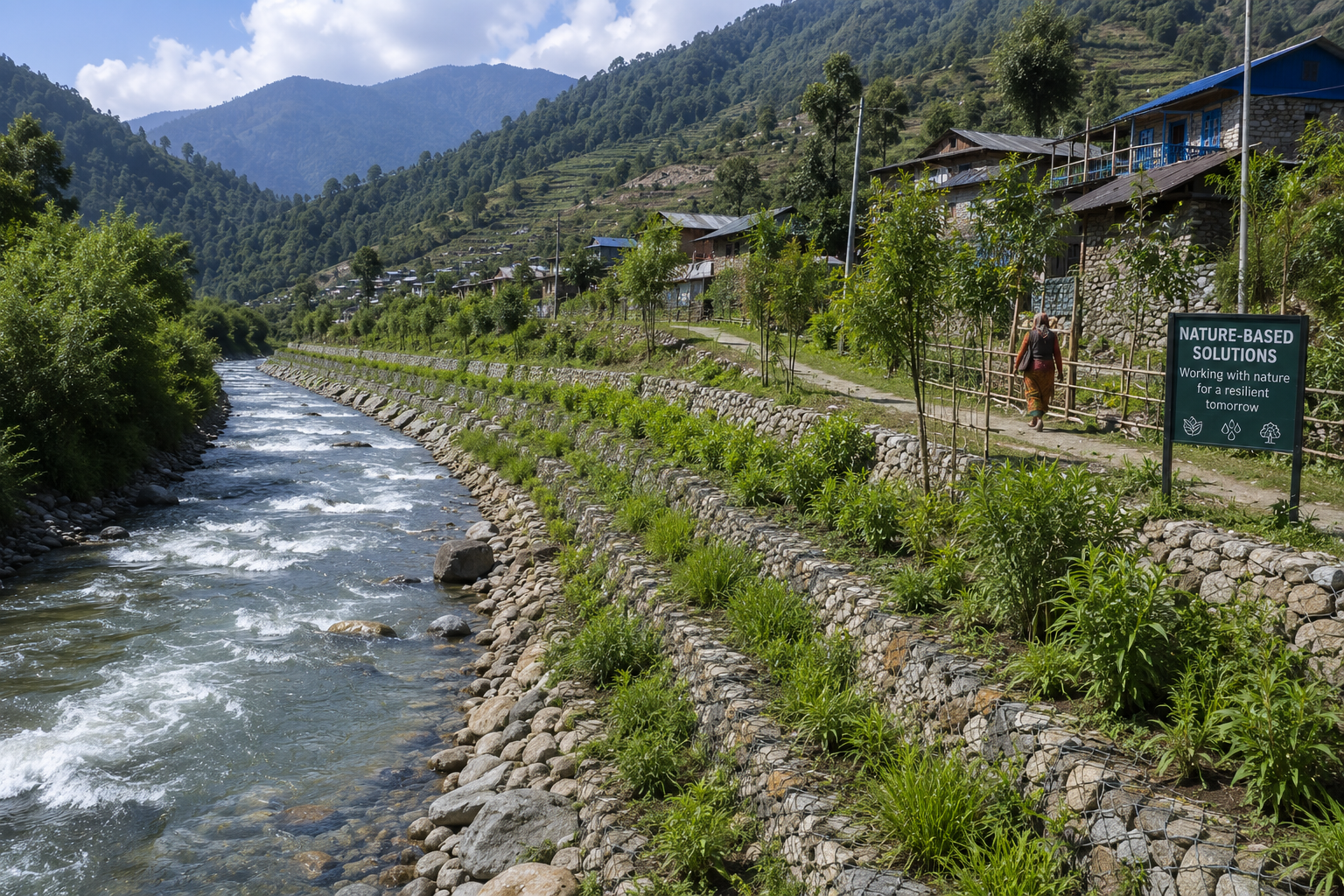
Nature-Based Solutions (NbS)
We prioritize nature-based solutions as a sustainable, cost-effective alternative to traditional, resource-heavy engineering. Our team implements ecosystem-based approaches—such as bio-engineering for slope stabilization, reforestation, and wetland restoration—to naturally regulate water cycles and reduce disaster impact. By utilizing vegetation and natural drainage to lower the energy of flash floods and stabilize fragile mountain terrain, we mitigate environmental risk while simultaneously enhancing local biodiversity. These interventions provide secondary benefits for agriculture and community livelihoods, creating a cycle of resilience that concrete alone cannot achieve.
Adaptation Roadmaps
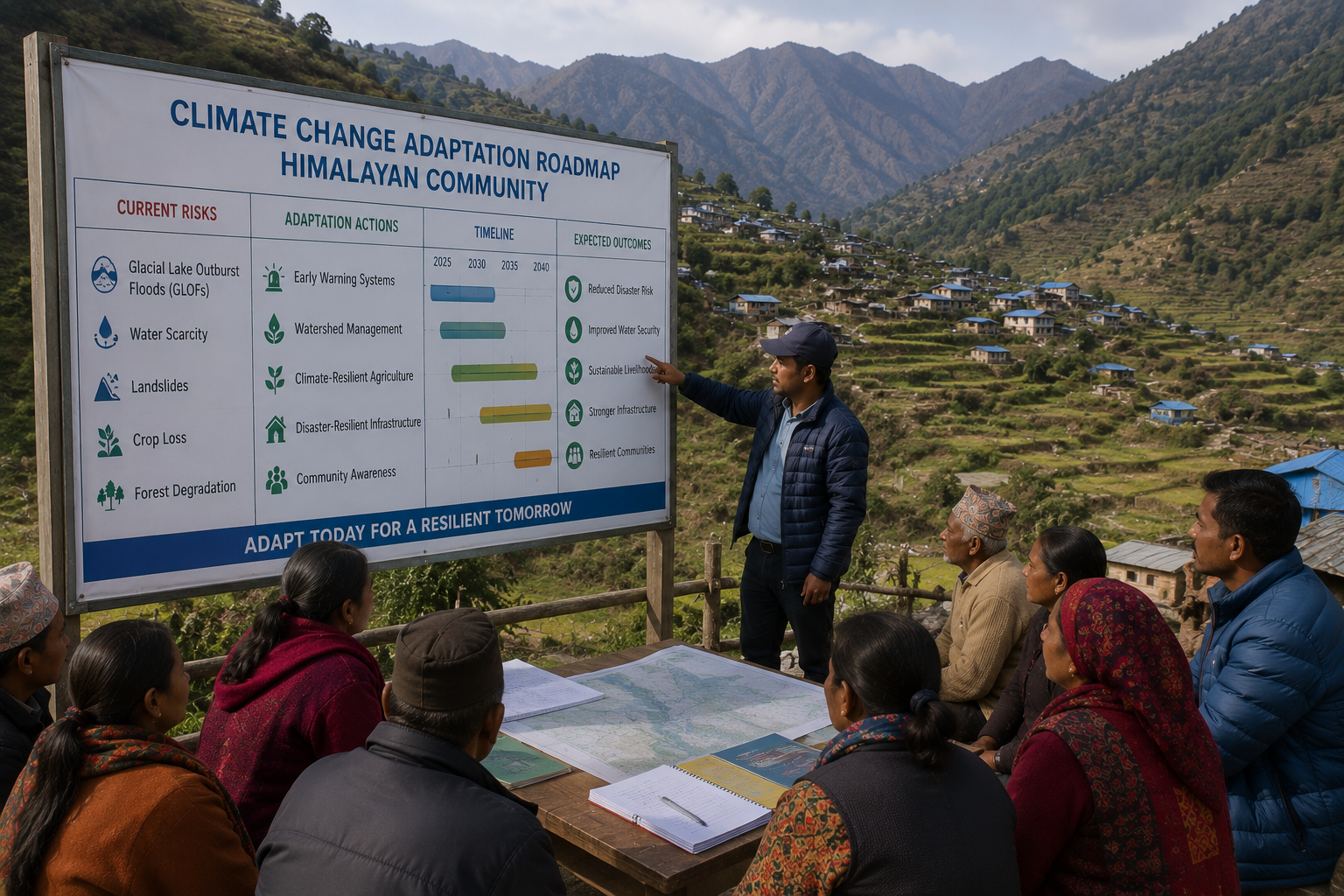
We guide municipalities and organizations through the complex transition toward climate leadership by creating clear, actionable adaptation roadmaps. This includes assisting with climate-smart budget tagging, which helps our partners track and secure domestic and international climate financing. We turn abstract climate targets into measurable, implementation-ready plans complete with key performance indicators and robust monitoring frameworks. By providing technical oversight throughout the construction and operation phases, we ensure that risk-informed standards are upheld, turning policy commitments into tangible, long-term developmental progress.