Overview
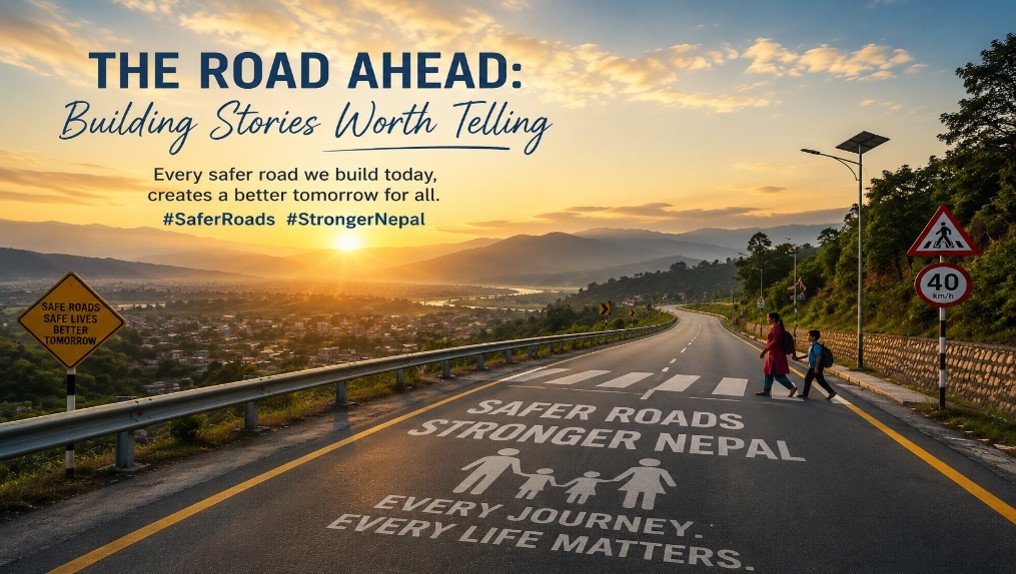
Every road tells two stories. One is about mobility—connecting people, businesses, and communities. The other is about responsibility. Behind every lane marking, traffic signal, and roadside barrier is an engineer whose decisions influence the safety of thousands of road users every day. Roads are more than ribbons of asphalt connecting one destination to another. They are lifelines that support economic growth, education, healthcare, tourism, and social interaction. Yet every journey also carries risk. A moment of distraction, an inadequately designed intersection, poor visibility on a sharp curve, or the absence of proper safety features can transform an ordinary trip into a tragedy. Every time we step onto a road, we place an immense amount of trust in the systems around us. We trust that the bridge ahead has been built to withstand time and nature, that the sharp bend has been designed with adequate visibility, that a pedestrian crossing offers protection rather than uncertainty, and that a traffic sign will provide the right guidance at the right moment. These are not coincidences; they are the result of careful planning, thoughtful engineering, effective governance, and a collective commitment to public safety. In recent decades, Nepal has made remarkable progress in expanding its road network and improving connectivity. However, this progress has also brought new challenges. Increasing traffic, rapid urbanization, difficult mountainous terrain, and changing travel patterns have made road safety one of the country's most pressing public concerns. Every road crash represents more than a statistic, it is a lost life, an injured family member, and a reminder that there is still much work to be done. As we celebrate Engineer's Day, it is worth reflecting not only on the roads we build but also on the lives they are meant to protect. Road safety is not solely the responsibility of engineers, governments, or law enforcement—it is a shared commitment that begins with good design and succeeds through collective action. NEPAL'S ROADS: PROGRESS AT WHAT COST? Over the past few decades, Nepal has witnessed an unprecedented expansion of its road network. Remote villages that were once accessible only by foot are now connected by roads, bringing communities closer to education, healthcare, markets, and economic opportunities. Improved connectivity has transformed lives and accelerated the nation's development. However, this progress has come with a difficult reality. As the number of vehicles on the road continues to rise, so do the risks. In many places, rapid road expansion has outpaced investments in safety measures such as proper road geometry, pedestrian facilities, traffic calming, clear signage, regular maintenance, and consistent enforcement. Challenging terrain, growing urban congestion, and changing travel patterns have further increased the complexity of keeping road users safe. The question, therefore, is not whether Nepal should continue building roads—it certainly should. The real challenge is ensuring that every new road is designed, built, and managed with safety at its core. Development should not be measured solely by how far our roads reach, but by how safely they carry the people who depend on them every day. MORE THAN A DRIVER’S MISTAKE ‘Every crash has a cause—but rarely just one.’ When a road crash occurs, blame often falls on the driver. While human error plays a major role, road safety is shaped by much more than individual decisions. It is influenced by the roads we build, the vehicles we drive, the rules we enforce, and the choices we make every day. • 🚶 Unsafe for Pedestrians – Missing footpaths, unsafe crossings, and roadside encroachment leave pedestrians exposed to danger. • 🏍 The Motorcycle Challenge – As Nepal's most common mode of transport, motorcycles are also among the most vulnerable, especially when speed and risky riding come into play. • 🌧 A Landscape That Demands More – Steep terrain, monsoon rains, landslides, and sharp bends make safe road design and maintenance essential. • 🚦 One Road, Many Users – Buses, trucks, cyclists, pedestrians, livestock, and street vendors often share the same road, increasing the need for safer planning and better road discipline. Road safety isn’t about preventing mistakes; it’s about ensuring that a single mistake doesn’t cost a life. DESIGNING ROADS THAT SAVES LIFE ‘Great roads don't just connect places—they protect the people who travel them.’ Imagine driving through a sharp mountain bend on a rainy evening. What helps you stay safe? It's not just your driving skills. The reflective chevron signs guide your direction, guardrails protect against steep drop-offs, road markings keep you in your lane, and proper drainage prevents water from pooling on the road. These are not accidental features; they are carefully designed to reduce risk. Good road design anticipates human mistakes instead of punishing them. A well-planned pedestrian crossing can save a child's life. A rumble strip can wake a drowsy driver. Better lighting can prevent a nighttime collision. Sometimes, the smallest engineering decisions make the biggest difference. 2 WHAT NEPAL NEEDS NEXT 🛣 Safer Infrastructure: Design roads that prevent mistakes, not punish them—with safer intersections, pedestrian crossings, guardrails, and clear signage. 📊 Data That Saves Lives: Every crash leaves a lesson. Better crash data helps identify high-risk locations and guides smarter investments. 🚦 Smarter Enforcement: Combine technology with consistent enforcement to reduce speeding, reckless driving, and repeat offences. 🎓 A Culture of Safety: Road safety starts before the journey begins—through education, awareness, and responsible driving habits. As Nepal continues to invest in new highways and rural roads, safety must become a fundamental part of every project, not an addition after construction is complete. Every road should be designed with one purpose in mind: to ensure that every journey ends safely. THE ROAD AHEAD: BUILDING STORIES WORTH TELLING ‘Every road tells a story. Let ours be remembered not for the lives we lost, but for the lives we chose to protect.’ Every road begins as a vision: a line on a map, a sketch on a drawing board, an idea to connect people and possibilities. But its true legacy is not measured by the distance it spans or the speed it allows. A child reaching school safely, a patient arriving at the hospital in time, a farmer transporting fresh produce to market, a family returning home after a long journey. These are the stories that define the success of our roads, not just the kilometres they cover, but the lives they touch. As Nepal continues to grow, our ambition should be greater than building more roads. We must build roads that inspire confidence, protect the vulnerable, and reflect our commitment to every life that travels upon them. Achieving this vision will require engineers who design with empathy, policymakers who prioritize safety, law enforcement that is consistent, and citizens who understand that every choice behind the wheel affects someone else's story. On this Engineer's Day, let us celebrate not only the structures we create but the futures we safeguard. Because the greatest engineering achievement is not a road that reaches farther, it is a road that brings everyone home safely.